Maras salt mines (Salineras de Maras) remain one of the most photographed and visited spots in the Sacred Valley. Thousands of small salt pools carved by hand over centuries still produce salt the exact same way people did 500–600 years ago.
Most people stop first at the upper lookout point. From there the whole valley fills with thousands of irregular white and brown rectangles that create very strong visual impact the first time you see them.
This classic viewpoint shows almost the complete set of pools in one single frame. People usually spend 10–20 minutes taking pictures from here because the light changes very fast especially when clouds move quickly over the mountains. The view hits hard. Really hard.
After the first wow moment most groups continue walking down.
Once you go down the dirt path you start walking between the actual working salt pools. The experience changes completely.
You walk on very narrow earth paths (sometimes less than 40 cm wide) between the small rectangular ponds. Water flows constantly from one pool to the next through handmade channels. You hear the soft sound of water all the time.
Different colors appear depending on:
Some pools look almost completely white Some look pinkish Some look dirty brown with very thick salt crystals forming
You can touch the salt crust with your fingers. Many people get surprised because the salt feels rougher than they expected.
Very few people pay real attention to this part but this is actually the most impressive engineering detail.
All the water comes from a single natural spring located higher up the mountain. That spring never stops flowing (even in the dry season).
From that single point the Incas (and the families that continued the work after) created a complete distribution system using only gravity. No pumps. No motors.
Hundreds of small handmade channels take the water exactly where it needs to go. The families who own the pools know exactly how many minutes or hours they can let water run into their section each turn. The rotation schedule has been respected for generations.
When you understand how the whole system depends on one single spring and perfect gravity management the place starts feeling even more impressive.
Depending on the month and the weather you can witness different stages:
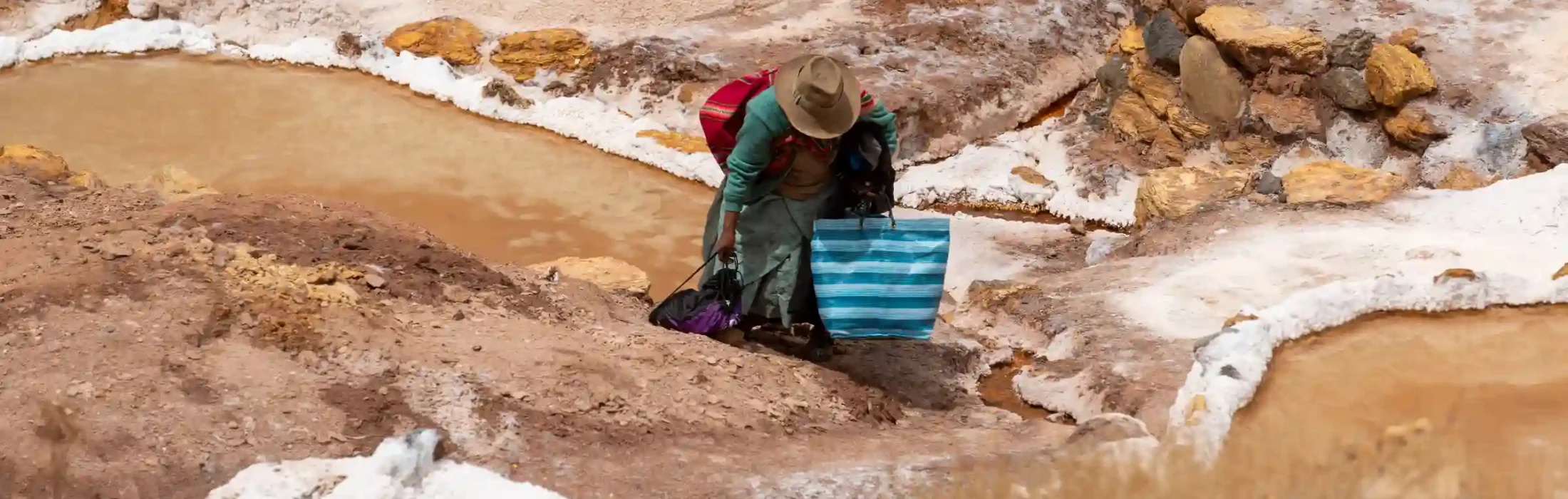
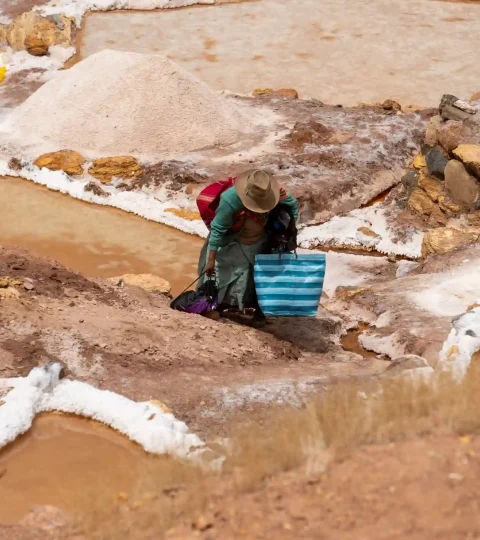
Harvest happens approximately every 7 to 15 days in each pool (depends on sun wind and humidity). Men and women work with very simple tools: plastic shovels wooden scrapers big woven sacks.
The salt gets carried up in sacks on people’s backs or sometimes with donkeys. Seeing this manual work in 2026 still feels very strong.
About 600–900 families still own and work the salt pools. Each family has the right to use certain number of pools during the established turns.
Many families sell small bags of the natural salt directly to visitors at the exit. The salt you buy there has no additives no iodine nothing added. Pure solar salt from the Andes.
The salt mines of Maras continue working today exactly because the system still makes economic sense for the families. That combination of ancient technique + current real use is probably what makes the place feel so alive and authentic when you walk there.