Pisac stands out in the Sacred Valley because it mixes huge Inca ruins high on the mountain with a busy town market below. The archaeological park covers a long ridge full of terraces temples residential areas and one of the biggest Inca cemeteries anywhere in the Andes. Most travelers hit both the upper ruins and the market in the same day often starting early to avoid crowds.
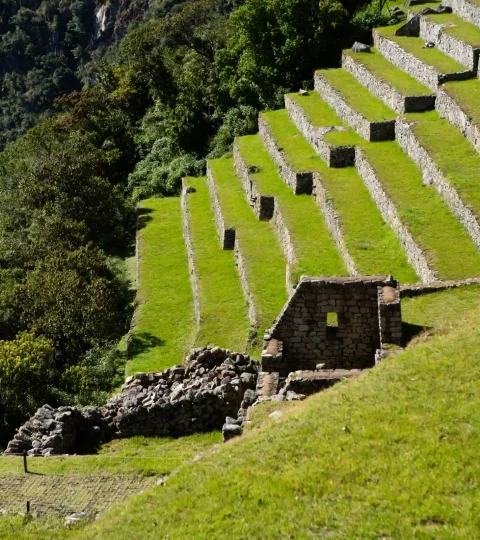
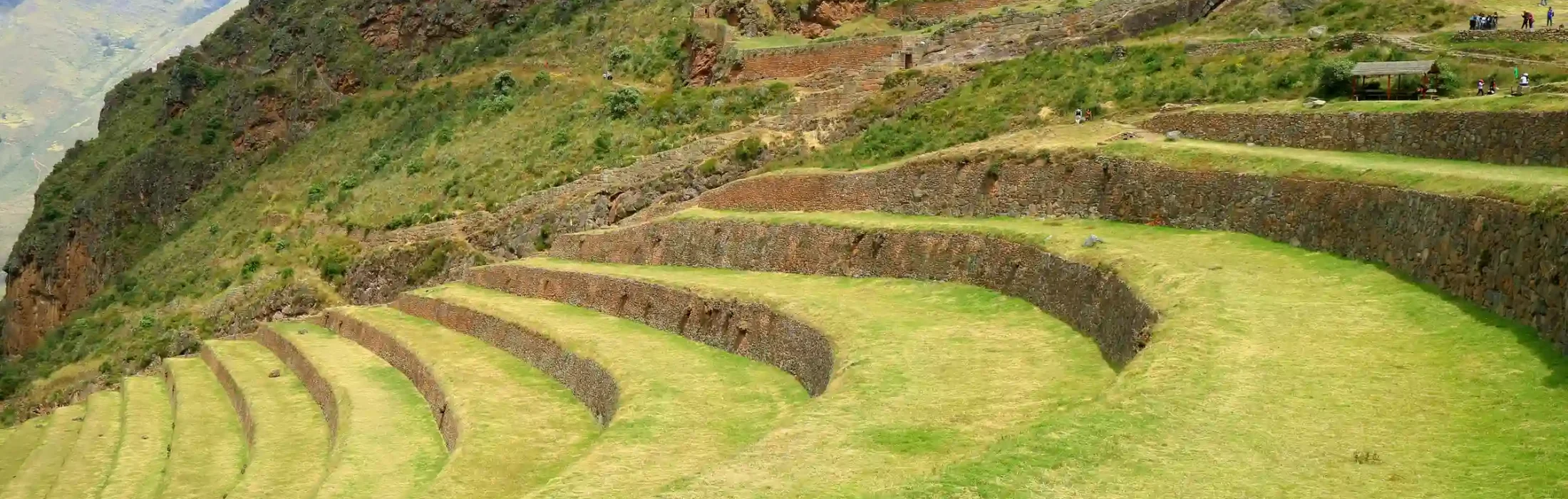
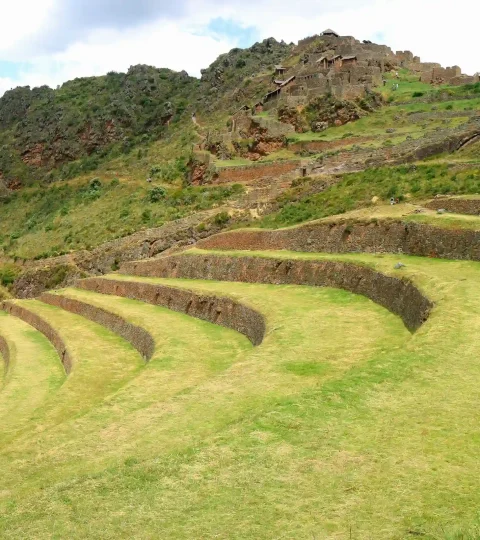
You reach the main entrance after a steep road climb or a hike up from town. Right away the massive agricultural terraces hit you hard. These stepped platforms follow the mountain contours for hundreds of meters some retaining walls reach several meters high.
The terraces served to grow crops like corn potatoes and quinoa in different microclimates created by the varying heights and sun exposure. Irrigation channels still visible in places show how water moved precisely across levels. Walking along the lower paths you see how the Incas shaped the steep slopes into productive land that’s still used by local farmers today.
From here views open wide over the valley river and distant peaks. The scale feels overwhelming at first. Really overwhelming.
Higher up paths lead to the sacred areas. Temple of the Sun sits prominent with finely cut stones fitted without mortar showing classic Inca precision. Nearby ceremonial fountains or baths channel water through carved channels for rituals tied to water and fertility in Andean traditions.
Intihuatana sector includes a carved stone possibly used for astronomical observations aligned with solstices. Structures here feel more elite smaller enclosures with better stonework than lower residential zones.
I walked this part once in the afternoon light and the shadows on the stones made the alignments stand out more than I expected. Some details like how water flows exactly right make you wonder about the exact ceremonies that happened.
Sections like Pisaqa or Kallaqasa show where people lived and defended the site. Walls guard posts and watchtowers use natural cliffs plus Inca masonry for protection. Houses built in groups with narrow paths between them give a sense of daily community life long ago.
Military zone loops offer quieter paths with fewer people. You pass small valleys creeks and more terraces. The whole layout defends the ridge while supporting life and ceremonies.
One standout feature is the large Inca cemetery with over 2000 tombs. Many burials carved directly into cliff faces visible from certain viewpoints. This is among the largest known Inca burial areas in the region.
Seeing those holes in the rock from across the valley gives a strong sense of how death fit into their worldview. Intense. Very intense.
Many people walk down instead of driving. The trail drops through terraces residential ruins and side paths taking 1 to 3 hours depending on stops. You pass more stonework channels and occasional llamas grazing on the grass.
The downhill feels easier on the legs but the views keep pulling you to stop. Some sections get steep with loose dirt so good shoes matter.
Down in the town square the market spreads out daily but peaks on Tuesdays Thursdays and especially Sundays. Stalls fill with textiles from alpaca wool ponchos shawls blankets woven in bright geometric patterns using backstrap looms.
You find silver jewelry ceramics wooden carvings fresh produce fruits vegetables herbs. Local Quechua people from nearby communities sell their work often in traditional clothing. Bargaining happens naturally prices vary but pure alpaca items feel worth it.
The market buzzes with voices smells of food and colors everywhere. Afternoons quieter than mornings. I picked up a small woven bag once and the woman explained the pattern meant protection that’s the kind of detail that sticks.
Entry to the archaeological park requires the Boleto Turístico de Cusco partial or full ticket covers Pisac plus other sites like Ollantaytambo Chinchero. Price around 70 soles for partial about 130 for full last I checked. Park opens early around 7 AM closes afternoon. Market free to walk through.
Combine ruins in morning then market after lunch works best. Guides help spot subtle things like how terraces catch sun differently or astronomical setups in stones. Weather up high changes quick layers hat water sunscreen needed.
Pisac shows Andean engineering at work terraces hugging mountains precise stone fits traditions linked to sun water land cycles. Pick your pace hike the full descent or focus on highlights but the place rewards time spent wandering. Trails good out there.