What to Pack for a Trip to Peru: The Technical Layering Guide, Microclimates, and Bag Restrictions
What Regulations Dictate Your Luggage in Peru?
The most punishing packing mistake in Peru is packing for two static temperatures: “hot” for the desert or coast, and “cold” for the mountains. In reality, traveling through Peru exposes your body to daily thermal oscillations exceeding 25°C (45°F) within a six-hour window. You can easily start your morning shivering in a 2°C (35°F) Andean frost in Cusco, sweat through a steep sunlit ascent at 22°C (72°F) under extreme ultraviolet radiation by midday, and finish your evening walking through humid, drizzle-drenched cloud forest at Machu Picchu. Every seasoned traveler in Peru knows the humiliating vulnerability of dragging a heavy 70-liter rolling suitcase over rain-slicked, centuries-old cobblestones in Cusco’s San Blas quarter, gasping for breath at 3,400 meters, only to realize that half the heavy cotton clothing in your bag is useless. Cotton traps perspiration, refuses to dry in the thin mountain air, and turns into an icy weight against your skin the second the afternoon sun disappears behind a granite peak. Packing for Peru is an exercise in technical layering, fabric science, and strict adherence to transport weight regulations.
The most punishing packing mistake in Peru is packing for two static temperatures: “hot” for the desert or coast, and “cold” for the mountains. In reality, traveling through Peru exposes your body to daily thermal oscillations exceeding 25°C (45°F) within a six-hour window. You can easily start your morning shivering in a 2°C (35°F) Andean frost in Cusco, sweat through a steep sunlit ascent at 22°C (72°F) under extreme ultraviolet radiation by midday, and finish your evening walking through humid, drizzle-drenched cloud forest at Machu Picchu.
Every seasoned traveler in Peru knows the humiliating vulnerability of dragging a heavy 70-liter rolling suitcase over rain-slicked, centuries-old cobblestones in Cusco’s San Blas quarter, gasping for breath at 3,400 meters, only to realize that half the heavy cotton clothing in your bag is useless. Cotton traps perspiration, refuses to dry in the thin mountain air, and turns into an icy weight against your skin the second the afternoon sun disappears behind a granite peak.
Packing for Peru is an exercise in technical layering, fabric science, and strict adherence to transport weight regulations.
What Regulations Dictate Your Luggage in Peru?
Before selecting garments, you must understand the two rigid regulatory restrictions that dictate how you move your gear through the country:
Regulation Authority
Maximum Allowance
Critical Enforcement Rule
Rail Operators
5.0 kg (11.0 lbs)
Bags exceeding dimensions or 5kg
(PeruRail / Inca Rail)
62 linear inches (L + W + H)
must be stored at base hotels
Machu Picchu Citadel Entry
40 x 35 x 20 cm
Large expedition backpacks
(Ministry of Culture)
(approx. 20 – 25 Liters)
prohibited at turnstiles
The Two-Bag Strategy
The only practical logistical strategy in Peru is the Split-Bag System:
Primary Rolling Luggage or Duffel (60–75L): Holds your city clothing, travel documents, spare shoes, and bulk toiletries. This bag stays secured in the complimentary luggage storage room of your Cusco or Sacred Valley hotel while you venture to Machu Picchu.
Technical Daypack (20–25L): The only bag that travels with you on the train to Aguas Calientes and enters the Machu Picchu citadel. It carries your daily layers, passport, medication, camera, and rain shell.
Mastering the 4-layer technical system protects against sub-zero Andean nights and intense midday equatorial UV index.
The Technical Layering System for Peru
Cotton has no place in high-altitude Andean or humid rainforest travel. To stay comfortable across desert dunes, alpine passes, and sub-tropical valleys, build your wardrobe around a four-layer technical architecture.
                    [ 4-LAYER HIGH-ALTITUDE SYSTEM ]

  Layer 4: Hard Shell   ──> Arc'teryx Beta LT / Patagonia Torrentshell 3L
  Layer 3: Insulation   ──> Patagonia Nano Puff / Arc'teryx Atom LT
  Layer 2: Active Mid   ──> Patagonia R1 Air Fleece Hoody
  Layer 1: Base Layer   ──> Smartwool Classic Thermal Merino 200 gsm
Layer 1: Next-to-Skin Base Layer (Moisture Management)
Top Choice: Smartwool Classic Thermal Merino 200 Crew or Icebreaker Oasis 200.
Why It Works: Merino wool wicks sweat away from the body during steep climbs, regulates temperature across dramatic weather shifts, and naturally resists odor for 3 to 4 days of continuous wear without washing.
Layer 2: Active Mid-Layer (Thermal Breathability)
Top Choice: Patagonia R1 Air Fleece Hoody or Arc’teryx Kyanite LT.
Why It Works: Knitted with breathable grid channels, this layer dumps excess heat when ascending sunlit ruins while trapping warmth under an outer shell.
Top Choice: Patagonia Nano Puff Jacket (PrimaLoft Gold synthetic) or Arc’teryx Atom Hoody.
Why It Works: While down provides maximum warmth-to-weight, high-loft down loses all insulating properties if it gets damp in Machu Picchu’s cloud forest. Synthetic fills retain up to 90% of their thermal efficiency when moist and pack into their own pocket.
Top Choice: Arc’teryx Beta LT (Gore-Tex) or Patagonia Torrentshell 3L (H2No).
Why It Works: Andean squalls arrive without warning. A windproof, waterproof membrane with pit zips prevents hypothermia from cold winds on passes like Salkantay or high lookouts in Cusco.
What Footwear Should You Pack?
Shoe Category
Recommended Model
Best Application in Peru
Technical Trail Walking Shoe
Salomon X Ultra 4 Low GTX
Day tours, Sacred Valley ruins,
(Versatile, lightweight)
or Merrell Moab 3
Machu Picchu stone staircases
Mid-Cut Hiking Boot
Lowa Renegade GTX Mid
Multi-day treks (Inca Trail,
(Ankle support, waterproof)
or Salomon Quest 4 GTX
Salkantay, Choquequirao)
City / Transition Sneaker
Allbirds Wool Runners
Exploring Lima culinary quarters
(Breathable, packable)
or standard casual trainers
and relaxed evenings in Cusco
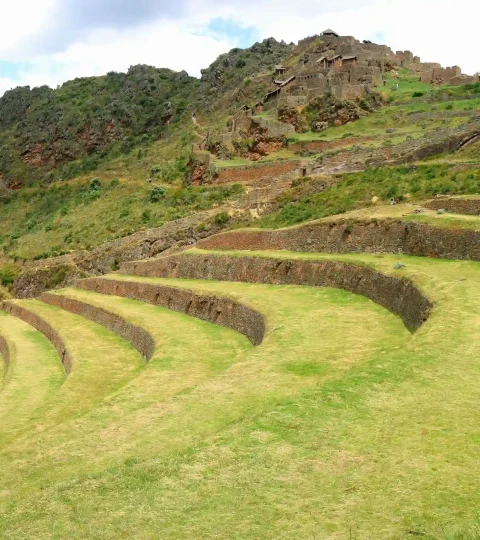
Field Observation → Useful Fact → Actionable Tip Personal Experience: During an afternoon shower on the stone terraces of Písac, my companion wore fashionable city running sneakers with flat rubber soles. Within three steps on the wet Inca slate, they slipped and fractured their wrist. Useful Fact: Inca stone pathways are polished from centuries of foot traffic and turn slick as glass when exposed to high-altitude drizzle. Recommendation: Pack footwear with aggressive multi-directional rubber lugs (such as Vibram Megagrip or Salomon Contagrip). Never attempt to walk ancient stone staircases in flat lifestyle sneakers.
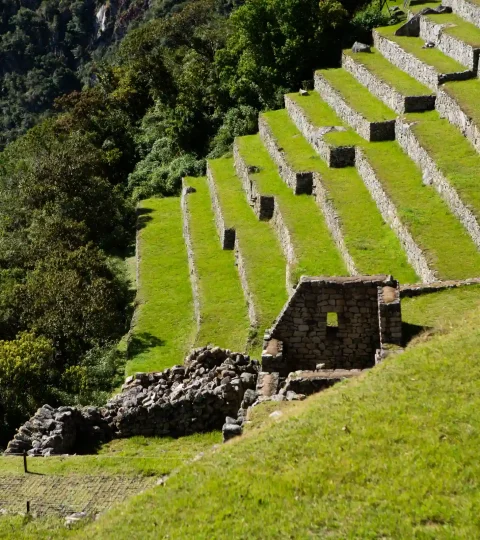
Choosing the right technical footwear with aggressive Vibram lugs for steep, polished Inca stone descents.
Sun, Altitude, and Medical Protection
The National Service of Meteorology and Hydrology of Peru (SENAMHI) regularly reports solar ultraviolet (UV) radiation indices exceeding 14 to 18 in Cusco, the Sacred Valley, and Lake Titicaca—ratings classified officially as “Extremely High.” The atmosphere at 3,500 meters is thinner, filtering significantly less solar radiation.
THE CRITICAL HEALTH & SUN KIT
========================================================================
Sunscreen:       Zinc Oxide Mineral Sunscreen SPF 50+ (Reef-safe)
Lip Balm:        Aquaphor or Burt's Bees SPF 30 (prevents altitude cracking)
Eye Protection:  Category 3 or Category 4 Polarized Sunglasses (UV400)
Headwear:        Wide-brim UPF 50+ Sun Hat (Outdoor Research / Tilley)
Hydration:       Electrolyte drink mix packets (Nuun or Liquid I.V.)
Altitude Meds:   Acetazolamide (Diamox) - Consult your physician before travel
Digestive Aid:   Oral Rehydration Salts, Bismuth Subsalicylate, Ciprofloxacin
========================================================================
Shopping and Gear Inspection in Cusco
If you forget an essential piece of technical gear or need high-altitude layers on arrival, avoid the unregulated textile stalls along the Plaza de Armas. These stalls frequently sell imported synthetic acrylic mislabeled as “Baby Alpaca.”
Tatoo Adventure Gear (Calle Choquechaka 229, San Blas; Open Mon–Sat 9:30 AM – 8:30 PM): The gold standard in Cusco for genuine outdoor technical apparel. Carries certified Osprey backpacks, Sea to Summit waterproof stuff sacks, Marmot waterproof jackets, and Petzl headlamps.
The North Face & Columbia Concept Stores (Portal de Panes 143 & Portal de Comercio 141, Plaza de Armas; Open daily 10:00 AM – 9:00 PM): Certified corporate outlets with full warranty-backed technical down and waterproof shells.
How to Spot Fake Alpaca Wool in Markets
The Touch and Weight Test: Genuine baby alpaca feels distinctly cool to the touch when you first handle it and has a noticeable drape and weight. Synthetic acrylic feels immediately warm, lightweight, and dry.
The Static Electricity Test: Rub the fabric vigorously against itself in low light. Acrylic sparks with static electricity; genuine alpaca fiber will never produce static charge.
The Burn Test: Ask the vendor for a stray fiber thread from the seam. Light it with a match: authentic alpaca singes slowly with the scent of burnt hair and disintegrates into soft grey ash. Acrylic melts quickly into a sticky, hard black plastic bead.
Where Information Fluctuates: Airline internal baggage rules for domestic carriers in Peru (such as LATAM, Sky, and JetSmart) regularly update carry-on dimensions and excess baggage fees. If you need confirmation on specific gear restrictions for specialty treks, email our equipment coordinators.
Complete Packing Checklist (Printable)
[ ] PASSPORT & TRAVEL DOCUMENTS
    - Physical passport (valid 6+ months)
    - Printed domestic flight boarding passes
    - Physical cash (300-500 Peruvian Soles in pristine condition)

[ ] CLOTHING & LAYERING
    - 2x Merino wool base layer tops (200 gsm)
    - 1x Active technical fleece (Patagonia R1 or similar)
    - 1x Packable synthetic insulated jacket (Nano Puff / Atom)
    - 1x Gore-Tex waterproof/windproof shell jacket
    - 2x Hiking pants (nylon/spandex, quick-dry, water-resistant)
    - 1x Comfortable evening pants / jeans
    - 4x Merino wool hiking socks (Darn Tough or Smartwool)
    - 4x Quick-dry moisture-wicking underwear
    - 1x Thermal base layer leggings (for cold Andean nights)

[ ] FOOTWEAR
    - 1x Broken-in trail shoes or hiking boots with lugged soles
    - 1x Casual travel sneaker for city walks

[ ] GEAR & ELECTRONICS
    - 1x Osprey Daylite / Talon 20-22L daypack (Machu Picchu compliant)
    - 1x 10,000 - 20,000 mAh portable power bank (cold drains batteries fast)
    - 1x Universal travel plug adapter (Peru uses Type A and Type C plugs)
    - 1x Reusable insulated water bottle (Hydro Flask or Nalgene)

[ ] HEALTH & HYGIENE
    - High-SPF 50+ mineral sunscreen
    - UPF 50+ wide-brim hat & polarized sunglasses
    - Electrolyte hydration powders
    - Altitude relief tablets & personal prescriptions
Packing purposefully transforms how you experience Peru. When your pack is light, your technical layers function seamlessly, and your gear complies with every transit regulation, you move through Peru with ease, focused entirely on the ancient landscapes unfolding around you.
Visiting Machu Picchu is a journey of discovery, blending adventure, history, and natural beauty. Whether you’re hiking the Inca Trail or taking a scenic train ride, proper planning ensures you’ll experience this wonder of the world at its fullest. Book early, pack smart, and prepare for an unforgettable adventure in the heart of the Andes.